
Caring for your braces is an instrumental part of anyone’s orthodontic success. Whether you’re wearing modern metal braces or clear ceramic braces, a consistent care routine will protect your appliance, support your oral health, and keep your orthodontic treatment right on track.
Our Johnston Orthodontics team is dedicated to helping you get the most out of your orthodontic treatment. Here’s our comprehensive guide to caring for your braces!
Braces Cleaning: The Basics
Braces make brushing and flossing a bit more challenging, but it’s far from impossible. These five tips will go a long way:
- Brush after every meal with a soft-bristled toothbrush and fluoride toothpaste
- Use circular motions and angle the brush above and below brackets
- Clean between teeth using floss threaders or orthodontic floss picks
- Use interdental brushes to clean around wires and brackets
- Finish with mouthwash to help fight plaque and freshen breath
Clear braces in Baytown require just as much care, since they largely consist of the same components. Although they blend in with your smile, they can stain if not cleaned properly. Be extra thorough with cleaning if you’re wearing clear ceramic brackets.
Food Tips: What to Eat & Avoid
Your food choices have a huge impact on both your oral health and your braces. The good news is that you can always find a diet that works for you and your braces, regardless of allergies or intolerances. Here’s what Dr. Johnston wants you to keep in mind:
Smart Choices:
- Soft fruits like bananas or peaches
- Cooked vegetables
- Soft bread, pasta, and rice
- Yogurt, smoothies, and pudding
- Scrambled eggs
Not-So-Smart Choices:
- Sticky items (caramel, gum)
- Hard snacks (popcorn, nuts, chips)
- Raw, crunchy vegetables (unless finely chopped)
- Chewy or crusty bread
- Ice or hard candy
The more you choose braces-friendly foods and avoid the ones that cause trouble, the easier it is to keep your braces in great shape. Since clear braces are especially prone to staining, you’ll also want to avoid highly pigmented foods like tomato sauces, berries, or red wine when possible.
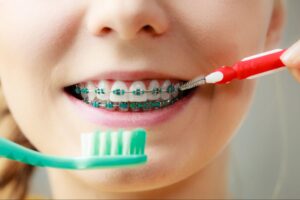
Your Braces Care Toolkit
Having these items easily available to you can make your daily care routine feel much more manageable. Johnston Orthodontics suggests building a “toolkit” containing:
- Soft-bristled or electric toothbrush: Gentle on your braces while effectively removing plaque and food particles. An electric version can boost efficiency.
- Fluoride toothpaste: Strengthens enamel and helps prevent cavities, especially important when brushing around brackets.
- Interdental brushes: These tiny brushes slip between brackets and wires to clean hard-to-reach areas.
- Mouthwash: Helps rinse away leftover debris, reduce plaque, and freshen your breath.
- Floss threaders or orthodontic floss picks: Designed to get underneath wires and between teeth, making flossing quicker and easier.
- Orthodontic wax: A soothing fix for any brackets or wires causing irritation inside your cheeks or lips.
- Compact mirror for travel checks: Useful for on-the-go inspections after meals or before meetings to make sure nothing’s stuck in your braces.
Keeping your kit handy helps you stay consistent, no matter where you are in Baytown or beyond, and that consistency adds up to a healthier, faster smile transformation.
Caring for Your Braces: Mini FAQ
Q: Why is it so important to avoid plaque buildup during braces treatment? Braces can trap food particles and plaque, which can lead to cavities, gum disease, and discoloration of teeth. Our goal is to keep your teeth and gums healthy throughout treatment, meaning better results when your braces come off.
Q: Can braces stain my teeth when they come off? Braces themselves don’t stain your teeth, but yes, poor oral hygiene can lead to permanent white spots or discoloration. That’s why you need to avoid sugary and acidic drinks, brush thoroughly, and use fluoride products to protect your enamel during treatment.
Q: What should I do if a bracket or wire breaks? If something breaks, don’t panic. Use orthodontic wax to cover any sharp edges and call our office as soon as possible. Avoid trying to fix the issue on your own, as it could cause more damage.
Q: Are there any extra tools that can make cleaning easier? Absolutely. Interdental brushes, water flossers, and electric toothbrushes are excellent tools for cleaning around brackets and wires. Dr. Johnston can recommend products that work best for your specific braces.
Q: How often should I visit for adjustments? Most patients visit our office every 4–8 weeks. These visits allow us to adjust wires, monitor progress, and double-check that your braces are functioning correctly.

You Deserve Top-Tier Treatment
We hardly expect anyone to get braces and then just figure the rest out for themselves! Johnston Orthodontics will be your main resource for any questions you have from the first day of treatment to the last. So don’t be afraid to ask!
You’re welcome to schedule a free consultation to meet Dr. Johnston and discuss orthodontic treatment.